Why we invested in Frankenburg Technologies
by Sten TamkiviFebruary 24th is a day we won’t forget in Europe: the date on which Russia launched a full scale war against Ukraine four years ago. And, which coincidentally is my country’s Independence Day, as Estonia declared its independence from the Russian Empire on February 24th, 1918.
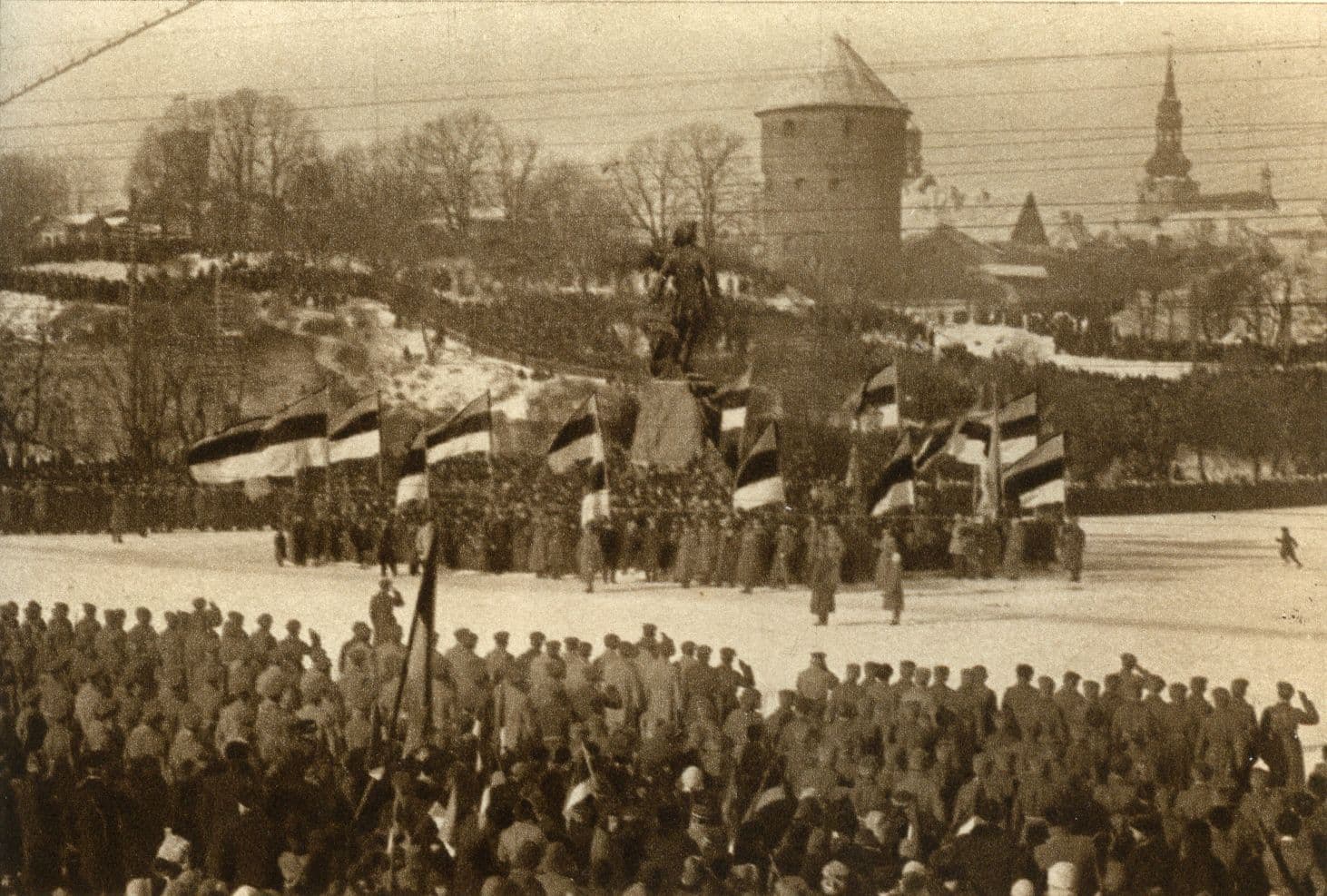
It’s a day to remember that our freedoms are precious and fragile, and that we mustn’t take them for granted. It’s also a moment to consider an urgent truth: that the war in Ukraine has fundamentally transformed the economics of the modern battlefield, and therefore the kinds of arsenals our democracies need.
Drones worth 3-50,000 EUR are destroying 5M EUR tanks, and best-in-class legacy air defence systems costing between 400k-4M EUR per missile (!) are too expensive and scarce to deter the 500-strong drone swarms that Russia sends daily into Ukraine.
We need to upgrade our defense hardware. The side that wins isn’t the one with the most complex and expensive gear, it’s the one that can manufacture, deploy and replace the fastest and cheapest.
Estonian-founded startup Frankenburg is developing the world’s first affordable, mass-manufacturable counter-drone missile system that's now battle-ready and being deployed in Ukraine this year.
The team has hired seasoned defence and missile tech veterans, who are already generating multi-billion-euro commercial opportunities, at a time when the immediate need for this technology is translating into historic levels of European investment into defence.
Frankenburg now has fresh capital to move from tests to industrial scale, positioning it as the continent’s first new missile prime, and a cornerstone of our re-armament effort.
New threats, new deterrents
Unmanned warfare has bred a number of futuristic, but imperfect, new deterrence technologies.
These range from drones designed to take down other drones, to high-powered lasers and machine guns retrofitted with automatic targeting tech that can do the same.
A defensive rotor drone cannot always catch up with an offensive jet powered one to destroy it and many are susceptible to electronic warfare (EW) jamming techniques. Lasers only work in limited clear weather conditions, as mist, rain or snow disrupt their beams. As you can imagine, especially in the North East of Europe, that happens often.
Automated machine guns are not precise or responsive enough to reliably down their targets.
Self-guided, high-speed missiles remain one of the most reliable ways to take down unmanned aircraft, but existing systems are designed to defend against small numbers of expensive fighter jets. They are simply too expensive, slow to produce and limited in quantity to combat cheap drone swarms.
Frankenburg has developed small drone interceptor missiles that are fully autonomous after launch, making them resilient to EW threat, and 10x cheaper and 100x faster to produce than legacy missile alternatives.
Made for fast manufacturing
When you’re upending a huge legacy industry, it helps to have some mavericks in your ranks.
Frankenburg’s early engineering team included hobbyist rocket makers who didn’t think like defence primes do, and worked from first principles to build every step of the technology for fast and mobile mass manufacturing from the ground up.
Big primes tend to develop cutting edge technology in an R&D lab, before handing it to production teams who work out how to manufacture it in large, specialised facilities.
Frankenburg has designed missiles that can be assembled in modular storage container production units that can be placed closer to where they’re needed. Rather than waiting for a prime that produces hundreds of missiles a year and would take quarters or years to deliver, a single Frankenburg manufacturing unit will soon be able to manufacture hundreds of missiles per day near the frontline.
This lets military supply chains produce the technology on their own soil, bolstering sovereignty. There is also a bigger geopolitical picture where our ambition can not be just to chase, but must be to globally lead in this field, compared to what current missile leaders in US, China or Russia are able to manufacture.
Missiles are rocket science
Frankenburg is working on timelines and budgets that would make your typical missile engineer blush.
Getting to live fire testing in less than three years, compared to timescales of seven to eight years for traditional systems.
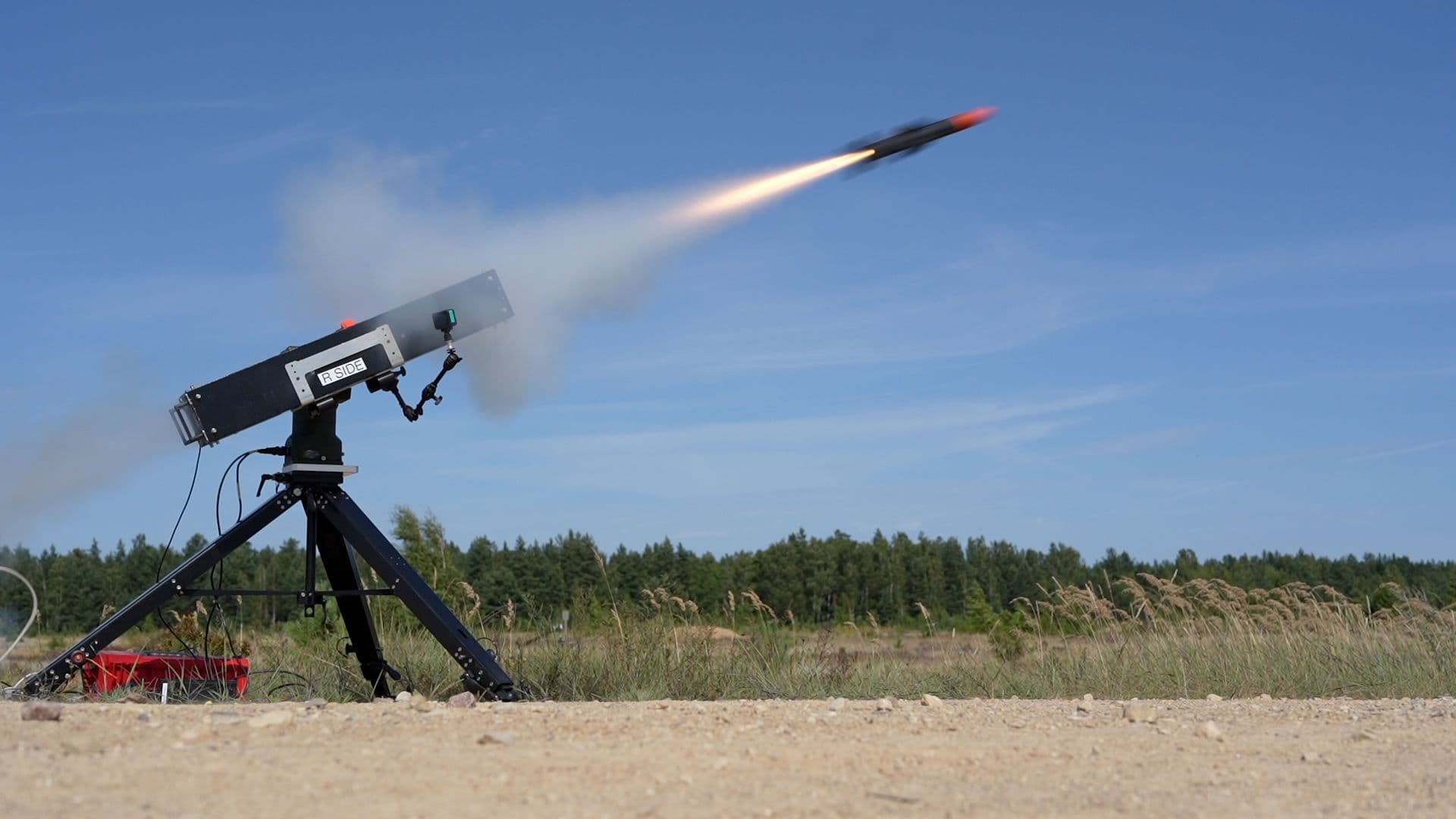
This is partly thanks to a pragmatic and scrappy startup culture, while carrying out rapid iteration cycles on Baltic live-fire ranges, the fastest testing ecosystem in Europe. It’s also due to recruiting a world-class team of missile engineers from European primes like Diehl Defence, MBDA, and Airbus, adding the skills needed to build highly specialised, weapon-grade technology to the company.
The company now has a talent moat which would make it challenging for a newcomer, or a prime wanting to move to smaller scale systems, to enter the market, as the continent’s leading minds in the field are already building Frankenburg at speed and now deploying into Ukraine.
Vision and experience
Founder Taavi Madiberk knows what it takes to scale complicated hardware companies, having previously founded supercapacitor company Skeleton, which myself and Taavet backed personally before we started Plural. Taavi and Frankenburg co-founder Marko Virkebau also started the zero-carbon energy startup Stargate Hydrogen.
He’s now combining that repeat founder experience with a conviction that Europe needs new technologies to defend itself, and his infectious energy has helped him bring along defence sector experts who understand how militaries operate and procure.
Frankenburg CEO Kusti Salm served as the former permanent secretary to the Estonian Ministry of Defence during the Russian invasion of Ukraine, and previously as the country’s Director of Defence Investments for 12 years, and later as National Armaments Director General. His track record and reputation in national defence circles has attracted some of the country’s top soldiers to the company, with former NATO commanding General for the Estonian division and Deputy Chief of Defence Forces Veiko-Vello Palm joining as COO.

That deep experience has led to smart decisions like developing sensor-agnostic missiles that can be seamlessly integrated into third-party radar systems. This means it’s easy for primes and militaries to add Frankenburg’s system into existing tech stacks, while also reducing the cost of the system by removing the need for proprietary sensors.
The company is now starting to build commercial velocity, signing meaningful partnerships, deploying in Ukraine via a partnership with a leading prime, while staying on track to meet ambitious production targets.
Global mindset from Estonia
As an Estonian investor, the defence of NATO’s Eastern flank isn’t just a “nice to have”, it’s an existential non-negotiable for my family and loved ones, but Frankenburg’s technology will be valuable to democracies around the world.
Most European countries’ legacy missile defence batteries would be exhausted within a matter of days if they were targeted with drone swarm attacks. Last week, Germany’s foreign minister announced that the country has run out of its own air defense missiles, and can no longer transfer them to Ukraine from its own reserves: “We simply don’t have any left.’
Frankenburg has already today teams across Estonia, Latvia, Ukraine, Denmark, Germany and the UK and is quickly laying the groundwork to become a vital part of national defence arsenals across the continent, and our democratic allies around the world.