Why we invested in Orbital Industries
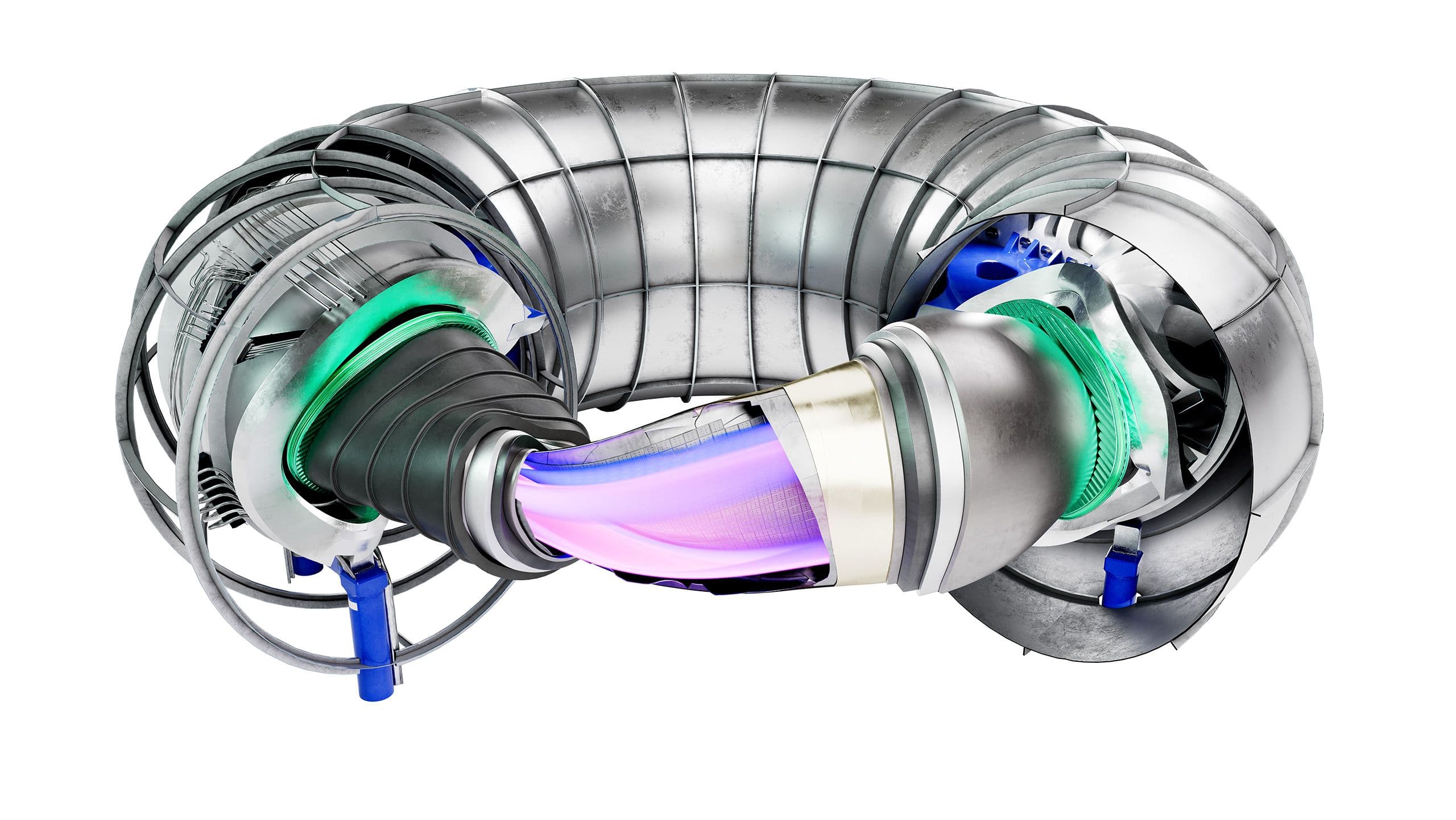
by Ian HogarthWhen I was a teenager I was entranced by JE Gordon’s seminal book The New Science of Strong Materials. It left me with a deep sense that all progress in engineering is ultimately underpinned by progress in materials science. I see this every day with the founders I work with at Plural - from Proxima Fusion’s use of high temperature superconducting tapes to design the next generation of stellarator magnets to Hypersonica’s need for materials that can withstand the extreme thermal stresses of flight beyond Mach 5.
Despite the importance of materials science, it remains one of the most underleveraged frontiers in technology. The physical sciences underpin almost every hard-but-critical engineering problem - and yet the materials in your phone, a battery or even the average data centre would mostly be recognisable to an engineer from thirty years ago. There has been no AlphaFold moment for materials: no algorithm or discovery that has meaningfully changed the parameters of what's possible.
There are various factors behind this. For example, AlphaFold was able to leverage the Protein Data Bank - an incredible global repository of experimentally determined structures for which there is no direct equivalent in materials. Similar to drug discovery, there is also a huge challenge in determining whether a thermodynamically stable material can actually be synthesised, and how.
But I also think it’s because building a company that can genuinely capture the value of AI materials science requires imagining a different kind of company altogether.
The most straightforward version of an AI materials company sells software to materials incumbents and hopes they'll use it to disrupt themselves. The logic to classic software investors is appealing - you can be asset light and sell into organisations with deep pockets. But this requires incumbents that can grab new breakthroughs with both hands and accelerate them to their potential.
Orbital, based in London, has a very different view: they use AI to discover and design novel materials, then engineer and manufacture products that can maximally exploit the properties of that material. It is a more challenging ‘full stack’ path than selling software, but it’s also an approach that can more aggressively push new materials into the real world.
Materials’ next top model
The foundation of that bet is Orb, Orbital's materials foundation model, whose open-source release is already being used across the semiconductor and chemicals industries by the likes of TSMC, Applied Materials and BASF.
Just as large language models have scaled to handle longer and longer documents, Orb has scaled to simulate larger and larger physical systems. It is the only model currently capable of simulating 100,000 atoms on a single GPU.
It also runs ten times faster than its nearest alternative, running quantum simulations that would normally take a week in the time it takes to grab a coffee. Plus, unlike most models at this frontier, its predictions don’t drift or hallucinate over time, meaning scientists can actually trust the results without having to supervise the model.
Independent benchmarks have validated these results. Orb has been found to outperform models from the likes of Meta, Google and leading academic labs, despite having had radically less funding up to this point.
That model is now at work on one of the most acute bottlenecks in modern infrastructure, deep in the AI stack. Through Orb, the team has developed Orbital’s first commercial application: cooling fluids for data centres.
If you can’t handle the heat, get out of the data centre
Data centres are already a $344 billion industry, set to be worth over $2 trillion by 2032.
But the chips powering the current generation of AI models generate heat at a density that conventional cooling was never designed to handle. As models grow more capable and the hardware running them grows more dense, water-based cooling approaches its limits. The question of how to keep next-generation GPUs from overheating is already becoming a hard constraint on the entire industry's ability to scale.
Orbital's first product is a dielectric cooling fluid and refrigeration system built specifically for this problem, solving a critical issue to enable high-density compute. The fluid contains no PFAS compounds, the so-called forever chemicals that are facing tightening regulatory pressure on both sides of the Atlantic, and which most existing alternatives rely on.
Developing a new industrial fluid of this kind would traditionally take the better part of a decade. Orbital did it faster, using the same materials AI that underpins everything else they're building.
Powering the engine
We are so lucky in London to have Demis Hassabis as a shining example of ambition for people to take inspiration from. Jonny Godwin, Orbital’s co-founder and CEO, spent years inside DeepMind’s materials research programme, and is trying his hardest to follow the example Demis has set him in building the next trillion dollar British company.
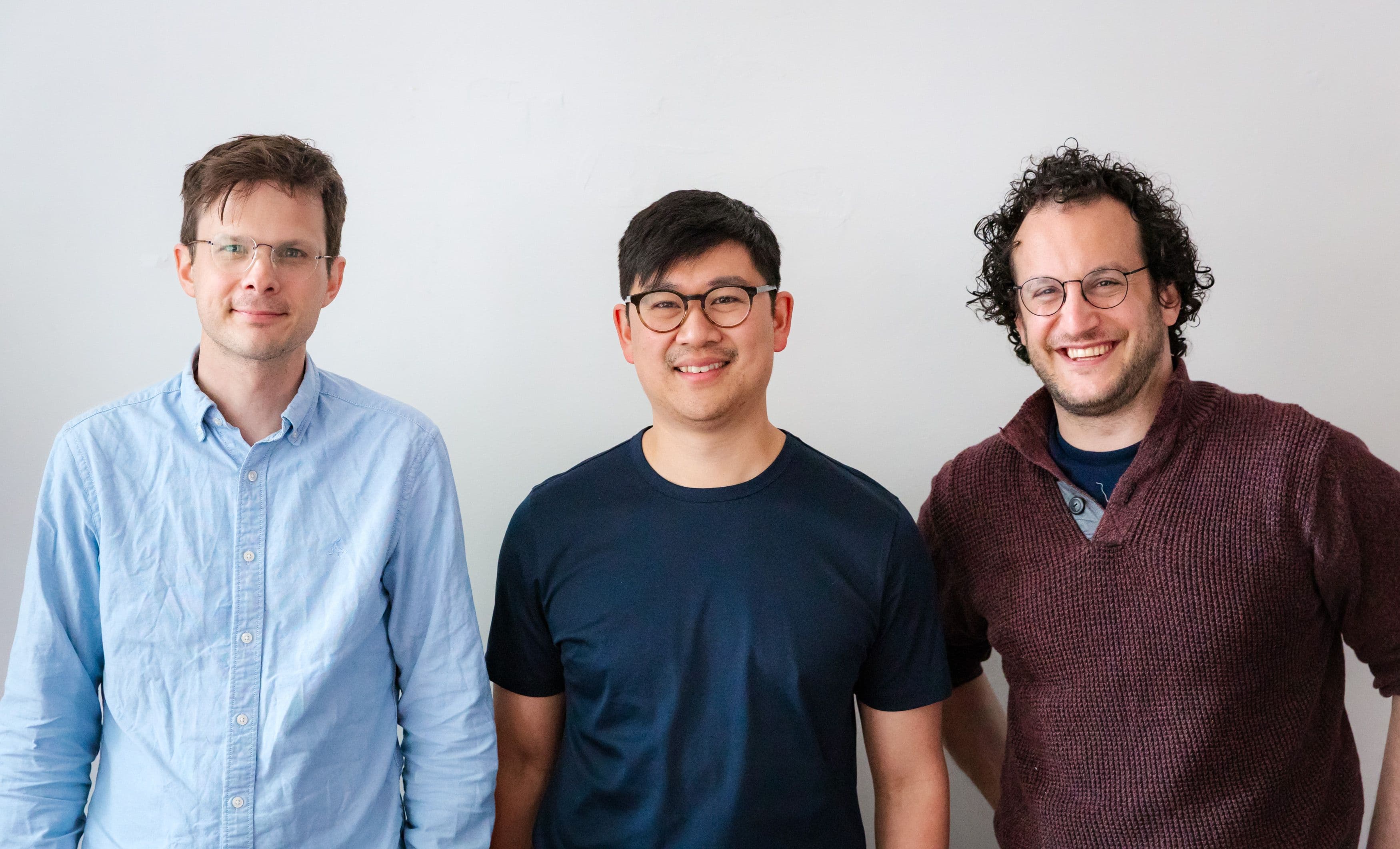
His machine learning capabilities are extremely strong, and he also has an intelligence that reaches well beyond the technical. He's one of the most cerebral founders I've met - thoughtful and philosophical with an opinionated point of view on where the physical sciences are going. While at DeepMind, he felt increasingly clear that the opportunity around materials was industrial. That conviction has underpinned everything Orbital has done since.
His co-founder James Gin-Pollock matches him on machine learning and has also forged a path through founding and selling companies. He has extremely impressive academic depth and the real-world scar tissue to go with it. They’re joined by Daniel Miodovnik, who brings very sharp commercial instincts and a deep capability at business development. His unrelenting drive has been instrumental in landing Orbital multi-year contracts with enormous players like AWS in their pursuit of new cooling and efficiency technologies.
The discovery layer
What’s really interesting about Orbital is that for lots of other companies, the cooling fluid would be the only product. But, in keeping with their determination to accelerate real-world impact, they are also manufacturing modular data centres with their cooling fluid embedded - engineered for Vera Rubin and the next generation of 2,000W+ TDP chips.
I see Orbital as an Isomorphic Labs for materials.
AlphaFold didn't just make protein structure prediction faster, but changed what kinds of questions biologists can ask. Problems that had been intractable for decades became solvable because a fundamental bottleneck in the scientific process had been removed. Isomorphic was then built on the recognition that this wasn't just a scientific achievement but an industrial one: that if you owned the capability and applied it vertically, you could build one of the most valuable companies in the history of medicine.
Materials science is waiting for the same moment. Progress in materials has been slow, but that’s not the result of a lack of ambition or capital. It's because the tools for discovering and designing new materials have remained, until very recently, extraordinarily primitive relative to the complexity of what's being attempted, and the approach has been too narrow.
The scale of the opportunity is best illustrated by who else sees it. The closest thing to Orbital in terms of vision is probably Jeff Bezos’ next company, Project Prometheus - a similar mission to apply AI to materials and manufacturing.
In five to ten years there will be many more hardware companies of serious scale - whether that’s in fusion, in defence or in quantum computing. Many of these industries are full of materials-constrained challenges. Orbital has the potential to be the company that unlocks the materials that fusion companies need, that makes the next generation of semiconductors possible and that sits at the centre of hardware development the way Nvidia currently sits at the centre of AI.
Advanced materials touch almost every part of our future, so the question is who will accelerate it into the next era. I believe the answer is being built in London today.
We are excited to lead Orbital’s $50m Series B and to join the fantastic existing group of investors behind the company including Compound VC, Fly Ventures, NVentures, Radical and Toyota Ventures.