Why we invested in Everlab
by Carina NamihThe mission behind Everlab could not be more personal. Marc Hermann, the CEO, and Sam Kothari, the COO, lost their fathers the same way: a heart attack, too young, no warning. Marc was thirteen, and his father was the fittest man he knew. And this was preventable - a coronary CT can show arterial plaque building years before it stops a heart.
In fact, the science behind real preventative medicine has been settled for decades. What’s missing has long been access: outside of a handful of elite, expensive clinics, it simply hasn’t existed for ordinary people.
Steven Lu, Everlab’s Chief Medical Officer, built one of those elite practices in Australia - delivering on the promise of preventative medicine by building a complete picture of each patient’s health, tracked over time, with risks acted on long before a symptom showed. It worked but couldn’t scale beyond a tiny elite.
Everyone else gets reactive medicine: an overstretched GP with ten minutes, working from records scattered across systems, treating the symptom in front of them.
Clearly the rest of us want something better. We track ourselves with Oura, Whoop, Apple Watches. We sign up for blood panels and full body scans. But generating the data was never the hard part. Knowing what to do with it is.
Everlab, founded in 2023, exists to close that gap - to take the medicine that ran inside Steven’s clinic and make it affordable and scalable enough to reach everyone else. It pulls a patient’s scattered records into one place, layers on continuous data from wearables and its own diagnostics - the MRIs, coronary CTs and panels included - and puts a clinician on the other side of all of it, with the one thing they almost never have: a complete, current picture.
This isn't a wellness app that tracks vanity metrics with a clinical veneer. This is a complex healthcare operations play that has achieved what so many others have failed at: integrating modern biomarker tracking while embedding into legacy medical infrastructure.
One in four Everlab members discover an abnormal result. For one in forty, the finding is life-changing - a blocked artery, a brain aneurysm, an early cancer that would have been close to untreatable a few months later. Caught while there is still time to do something.
The AI gathers, the doctor decides
Everlab’s models and agents do the unglamorous work - pulling messy, unstructured history out of legacy systems and turning it into something a clinician can act on inside their own workflow, in minutes instead of hours.
But the real asset sits underneath: more than 1,850 provider locations integrated, and over 180 clinicians working on the platform.
Combined with continuous data from wearables and diagnostics, clinicians can move from treating problems as they arise to building a forward-looking plan for each patient, optimising their health and unlocking preventative care.

Four founders, four disciplines
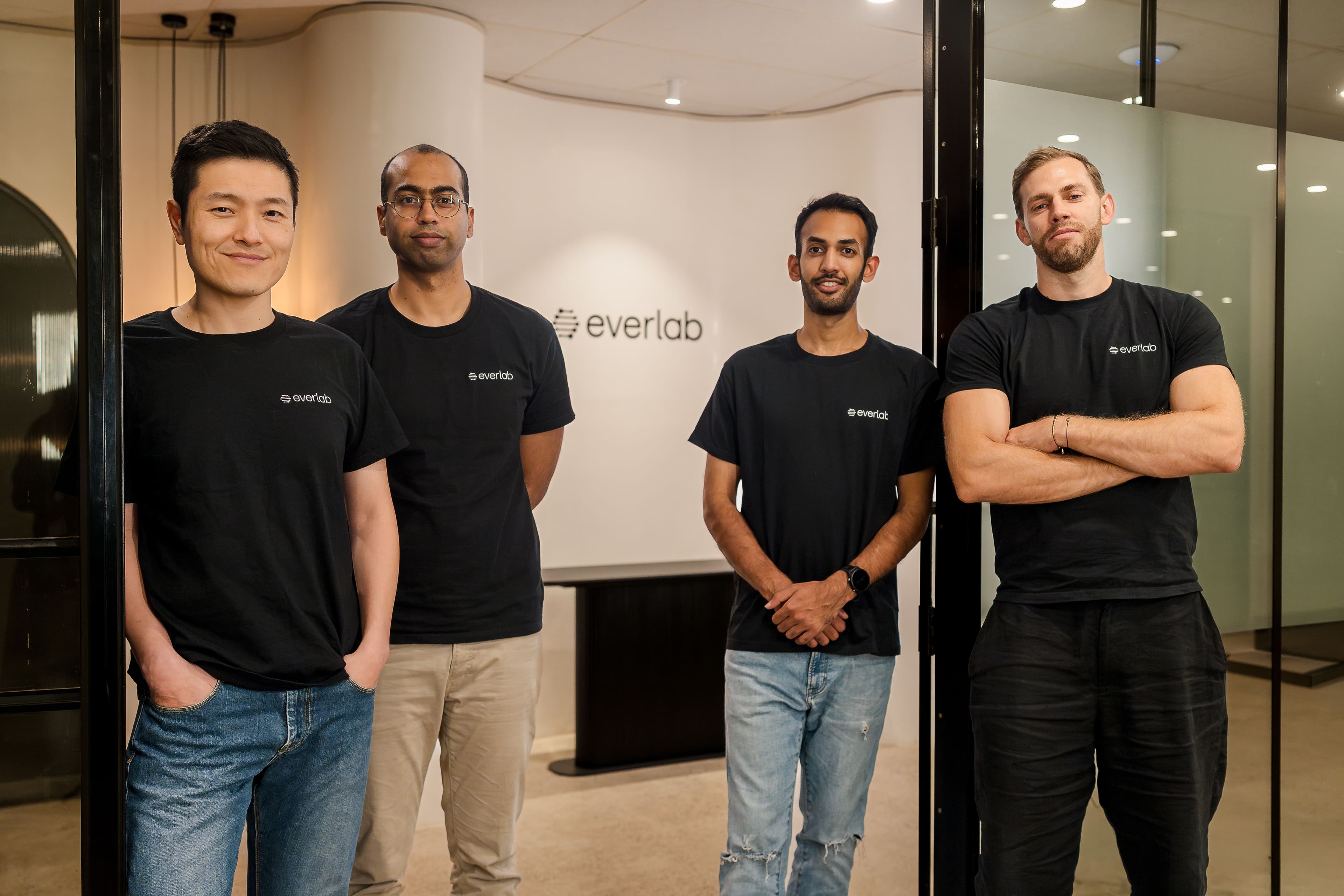
Building this needs a near impossible combination in one company - commercial aggression, clinical credibility, operational complexity and infrastructure-grade engineering - and Everlab has a founder for each.
Marc, the CEO, co-founded the Berlin nutrition brand foodspring and scaled it through an exit to Mars; he brings the commercial drive. Steven, the Chief Medical Officer, has practised for nearly two decades; Everlab is scaling the elite experience from his clinic to everyone who couldn’t get through its doors. Sam, the COO, came from founding several companies of his own and senior growth roles at Airwallex. CTO Anshul wrote his first code at nine, started his first company at seventeen, and has founded and sold two since; at Amazon Australia he helped stand up the country’s third-party marketplace - infrastructure at national scale, which is the altitude Everlab’s system is built at.
At last, elite medicine that scales
The model is already working. In its first twelve months fully live, Everlab ran 40,000 consultations for 20,000 patients, processed more than 21 million biomarker results, and now handles over 200,000 health reports a month. That data compounds - every consultation sharpens the next risk model, until the system can flag disease earlier than a doctor reacting to symptoms ever could.
Everlab proved the model in Australia. The next market is the UK, where the case is starkest: Britain spends an estimated 5% of its health budget on prevention, while roughly 40% of NHS spending goes on conditions that were preventable to begin with. An ageing population and rising chronic disease make that arithmetic worse every year. Preventative, data-led medicine still reads like a luxury. Under this much strain, it is closer to a necessity.
The medicine that could have saved Marc’s and Sam’s fathers already exists, but has historically come with a price tag that very few can afford. Everlab is building the version that the rest of us can benefit from, where the care that was once boutique will become the norm.