Why we invested in Augur
by Khaled HeliouiIn October 2025, six men were jailed in the UK for a crime that exposed a growing existential threat to Europe. Seven months earlier, directed by the Russian mercenary organisation the Wagner Group that has shifted its sabotage efforts from Africa to Europe, they had carried out an arson attack on a London warehouse providing aid to Ukraine.
This was just one example of how hostile states are now turning to hybrid war tactics that fall deliberately below the threshold of conventional warfare, designed to undermine, destabilise and intimidate our democracies.
The reality, and severity, of these so-called “grey zone” threats from hostile actors is really black and white. They span plots to destroy critical infrastructure like undersea telecom cables and energy networks, acts of industrial sabotage on transport companies and assassination plots on European soil, in one case against the CEO of one of our biggest defence primes.
Russia’s full-scale invasion of Ukraine laid bare just how naive Europe has been about defending itself on the battlefield: if it hadn’t been for the ingenuity and bravery of the Ukrainians, the continent would look very different today.
A level of urgency incompatible with incumbents’ pace of innovation
We cannot afford to show the same naivety when it comes to defending against the myriad modern threats on home soil posed by hostile states, terrorism and serious organised crime.
The complexity of the threat picture facing our domestic security apparatus has changed dramatically, and our current capabilities to protect ourselves are both highly outdated and highly dependent on non sovereign technology.
Augur is building the modern operating system for security and public safety. Its AI analytics platform unifies the patchwork of existing surveillance systems and hardware to enable faster threat prediction, detection and response.
Founded by Harry Mead, Imran Lone and Stefan Kopieczek, the team has leaders who have already been instrumental in building European security technology. Imran Lone spent a decade at Palantir, building security infrastructure for the UK and European governments, before moving onto machine learning, computer vision and drone footage processing. Head of engineering Stefan Kopieczek also spent 9 years at Palantir in product roles and client-facing positions, helping governments improve workflows around data, intelligence and security.
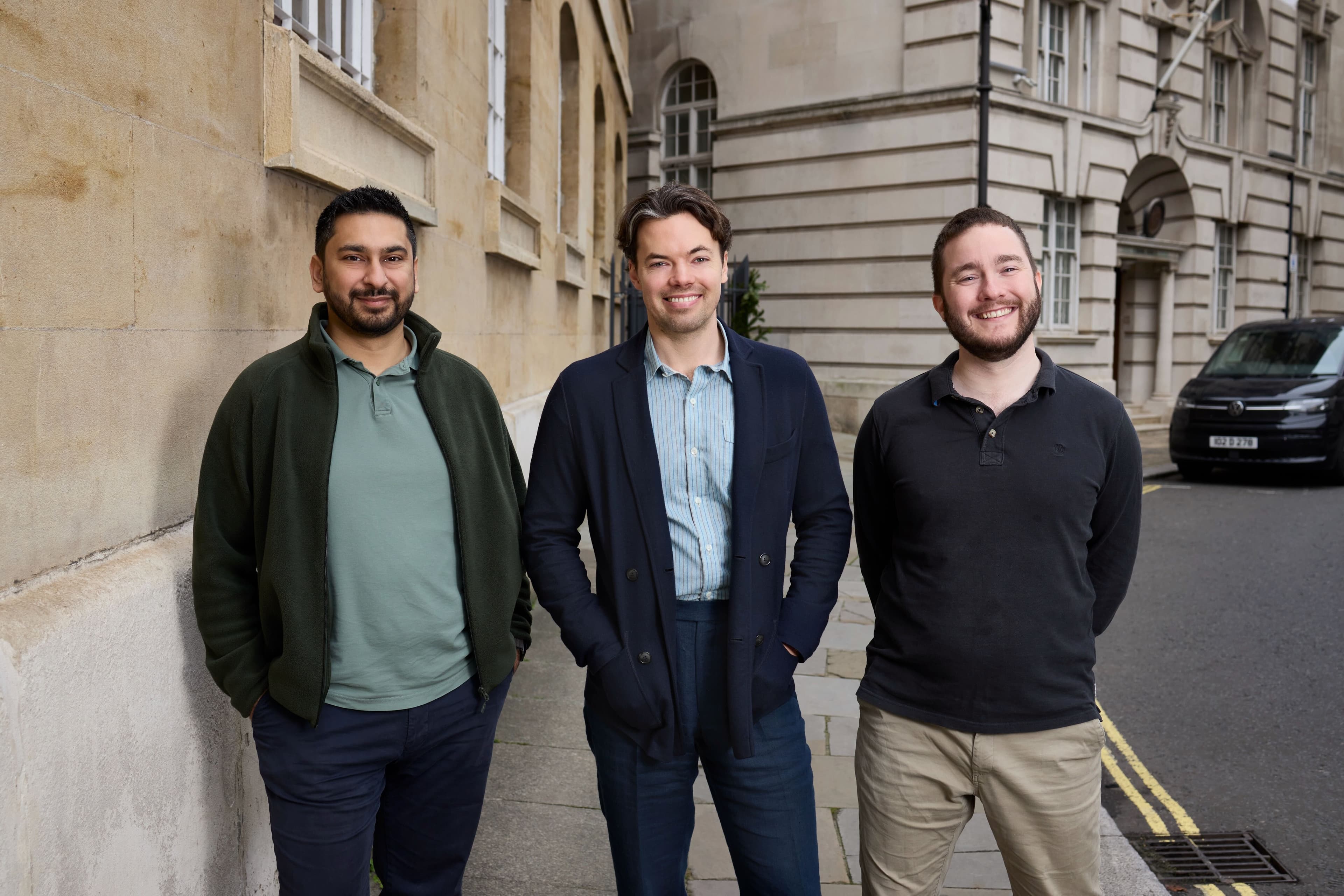
Augur has already begun deployments with major infrastructure and venue operators, as it develops the sovereign capability Europe needs to protect against threats on home soil, aligned with our continent’s values. Augur's rapid technical progress is in large part thanks to Harry's vision in assembling a founding team with deep security technology experience who share the conviction that a focussed, AI-native startup will innovate faster than legacy providers.
Modern technology for modern threats
Just as automated drones and electronic warfare have completely rewritten the strategic and economic rules of the modern battlefield, AI can fundamentally transform the cost and performance equation in civil threat detection and prevention. In this case though, thankfully it tips the scales against hostile actors as new threats to national security are emerging notably from the technologies developed on the front lines.
Augur’s platform essentially futureproofs legacy surveillance hardware, giving our security personnel an iterative real-time analytics intelligence layer that gives them the best chance of stopping coordinated and sophisticated attacks. By integrating with existing cameras and sensors, its technology is seamless for institutions to adopt, while radically increasing the value and effectiveness of existing security camera networks and allowing them to match the pace of innovation from adversaries.
It combines machine learning models that stitch together multiple camera feeds, letting users detect abnormal behaviour for early warning, track unfolding incidents across multiple locations and reconstruct events within seconds rather than hours.
This means that if a hostile actor is carrying out reconnaissance around a powerplant or factory, for example, Augur helps security and intelligence personnel detect a potential attack on that infrastructure before it happens.
If an incident does occur, they can intervene faster in situations where every moment counts, with the platform already outperforming alternatives on the market just two years since the company’s launch.
European technology for European values
Imran and Stefan's decision to join Augur as co-founders also came down to believing in Harry's vision of building a sovereign, more democratic alternative to what is currently on the market. Augur hasn’t just built technology that offers entirely new public safety capabilities, it is also built with a principled moral compass that respects our civil liberties.
Crucially, it chose the hard path of developing its person tracking technology without relying on facial recognition, focusing instead on behavioural and movement patterns within 3D space. This helps preserve the public’s right to privacy, while keeping the platform compliant with GDPR and other European regulations. Choices like this show why we need sovereign technology to protect our populations and critical infrastructure.
Recent events have also shown us how many commercial security companies are being designed as black box systems, meaning that the ways they use AI are neither transparent nor accountable to users or policy makers, let alone civil society. Augur is committed to building a platform that is open about how it uses AI, with tangible guardrails that respect civil rights - a factor that was a key part of the due diligence we did on the company.
At a time of global conflict, where our interests may not always be aligned with historical allies it is more important than ever that we look to deploy sovereign solutions to protect European citizens. We need to draw the lessons of the Ukrainian war where over-reliance on foreign partners created strategic limitations, as we saw with the shut down of intelligence sharing in Ukraine.
We can’t afford our historical naivety anymore
While Europe is finally waking up to the need to invest in sovereign defence for the battlefield, when it comes to protecting ourselves against growing threats on our home soil, we are not fit for purpose.
This is a truth now finally being recognised, with NATO allies committing to spend 1.5% of GDP on civil resilience, as part of a wider 5% total investment in defence. And as the current war in Iran is showing the limitation of “investing more of the same from the same incumbents” for defence purposes we need to back genuine innovation for the threats we are facing today. It’s an acknowledgement that defence starts at home: protecting both our people and our infrastructure from a complex network of threats - be that terrorism, sabotage or other forms of attack. This presents one of the defining security challenges of the decade.
Augur combines the deep field experience and technological innovation needed to address one of the defining security challenges of the decade, with a guiding moral compass that will ultimately make its tech more valuable than what has come before.