Why we invested in Hypersonica
by Ian HogarthOn a fundamental level, learning to move and manoeuvre at hypersonic speeds unlocks a whole new regime: there are obvious military applications like missiles, drones and jets - but also new civilian uses like significantly faster travel or even passenger access to space at scale via space planes with airport-like operations.
Today, though, hypersonic technology isn’t close to that level of readiness. The stack is still immature.
But just as you need to have built a single-use rocket to get to a reusable one, we believe there are stepping stones in hypersonic technology where the technological readiness level is there and can unlock the first rung of this ladder: hypersonic missiles. That’s why I’ve invested in Hypersonica, the company that I think is best-placed to deliver a critical sovereign capability for Europe.
Why hypersonics
The immediate value that a hypersonic missile would enable for its holder is deep strike. A hypersonic missile lets you hit targets from further away, faster and with a much higher chance of getting through existing defences. That alone is a step-change in military capability for Europe, at a time where other countries already have this technology.
The second-order effect is technoeconomic. If hypersonic missiles can be made cheaper and produced at scale, they start to redefine how wars are fought (and avoided) and the choices that are made on a military’s capability profile. In the same way that drones can destroy expensive tanks, a military force could choose to hit an opponent with an aircraft (costing hundreds of millions) launched from a carrier (billions) – or it could use hypersonic missiles (in the single-digit millions). While defence budgets are rising across Europe they remain tight, but Hypersonica’s asymmetric cost advantage means they could displace the need for other exquisite capabilities and expand the size of the market - enhancing deterrence at a lower price point.
Why Europe
Despite having invented the ballistic missile more than 80 years ago and having led the world in supersonic flight with Concorde, Europe today produces almost no very long-range missiles at scale.
There’s an obviously compelling case for why we need hypersonic missile technology right now. Ukraine has exposed the importance of deep-strike weapons in modern conflict - Russia has deployed its Oreshnik missile to target civilians and civilian infrastructure, while Ukraine has conducted strikes on military assets deep into Russian territory.
Across Europe, countries have woken up to this strategic reality, with the emergence of new efforts to develop deep-strike capability such as the Anglo-German Trinity House Agreement. More recently, the UK has committed to send ballistic deep-strike missiles to Ukraine under Project NIGHTFALL.
Hypersonic missiles present the next step in these sovereign deep-strike efforts for Europe, capable of flying at higher speeds and with much greater maneuverability than conventional cruise and ballistic missiles. The demand signals are crystalising across defence ministries, with an existing Hypersonics Technology Development Framework in the UK, and a commitment to develop hypersonic capabilities as a core defence priority in Merz’s coalition agreement. But, in this sovereign moment for Europe, we need to move faster than our typical timelines allow. In November, the US prioritised scaled hypersonics as one of six critical technology areas, focussing on rapid, high-volume production. Both Russia and China have long pursued hypersonic capability and claim to have deployable weapons systems.
Designing and delivering hypersonic capability is a hard engineering problem. Dr. Philipp Kerth and Dr. Marc Ewenz have the qualities that make for the best founders: incredible drive and intensity, combined with an obsessive focus on first-principles engineering, developed through a deep technical background completing PhDs in hypersonics at Oxford. They’ve been working on hypersonics for years and founded Hypersonica two years ago. Their interest and experience dates back to well before hypersonics became a regular theme in headlines, and before Russia and China demonstrated these capabilities in ways that made Europe’s vulnerability clear.
The question of how
If you research hypersonics, you’ll hear things like “expensive”, “exquisite” and “2030s”. But, the SpaceX model has shown that it’s possible to overturn long-held assumptions about the price and speed at which advanced capabilities can be delivered. Through iterative development cycles, backed by private capital, Hypersonica is de-risking the build out of hypersonic missiles for defence ministries, while delivering at a significantly faster pace and lower cost to comparable systems.
The company’s progress is staggering. I went to Andoya in Norway last week to observe Hypersonica’s first test flight - the first ever privately-funded test flight of hypersonics in Europe. The test flight was fully successful, and wholly validated their approach so far. I felt a sense of real awe watching the bright flash of the test flight lifting off against the beauty of the Arctic Circle. It felt historic and reminded me of the power of serious founders with a hard technical edge to redefine what feels possible.
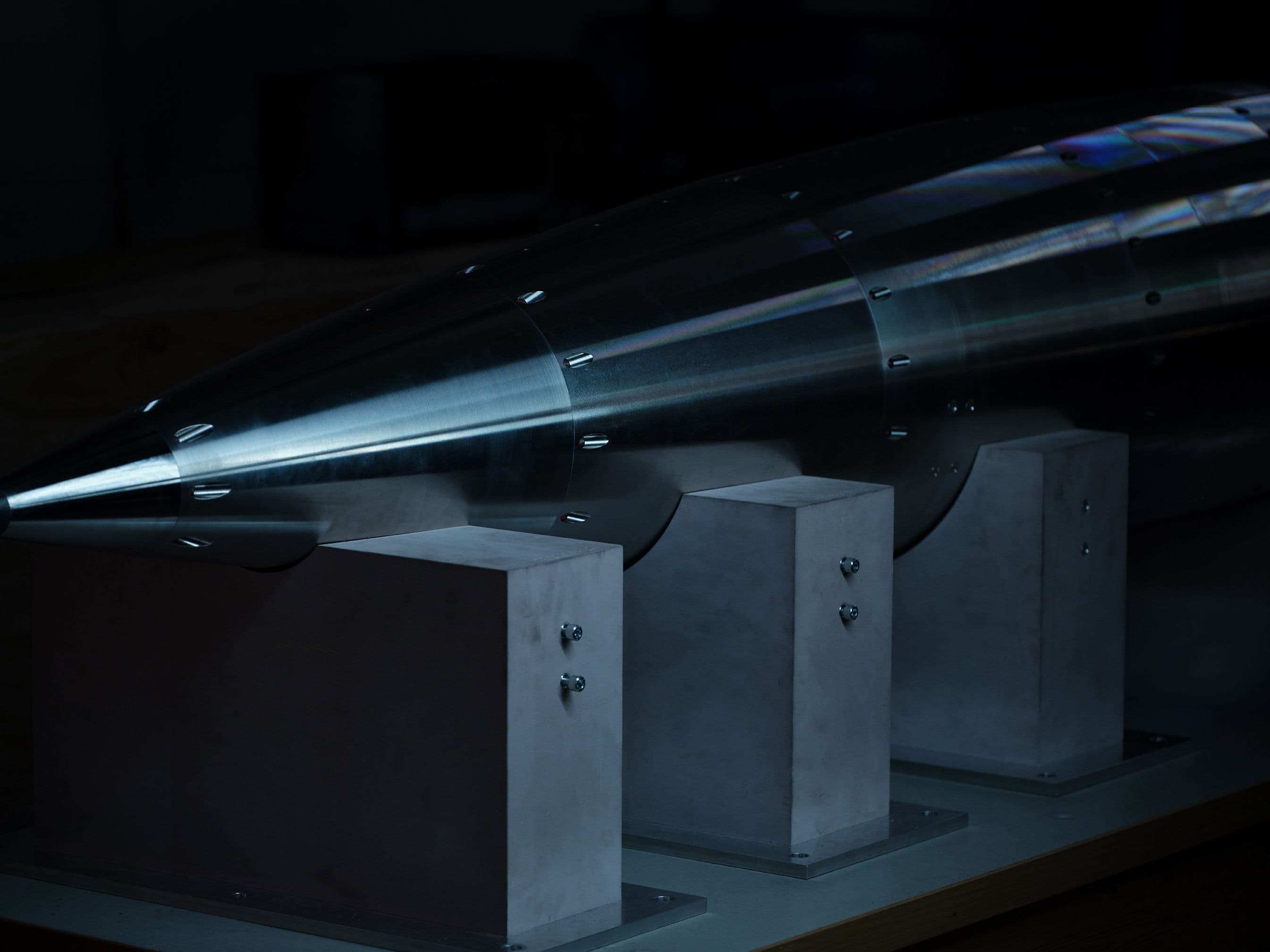
What makes this test flight even more impressive is the timeline. Just nine months ago, Hypersonica’s SCOOTER vehicle was still a systems concept. This flight is the first real step toward building operational experience: flight testing in the hypersonic regime, operating payloads under extreme conditions and collecting the sensor data needed to validate models and calibrate systems.
Hypersonica’s system is modular by design, enabling rapid upgrades and shorter development cycles, while reducing costs by over 80% compared with conventional approaches. Coming in at a lower price point changes the doctrine around the deployment of hypersonic strike for militaries across Europe.
There's been a broader mindset shift across Europe, with governments working with start-ups earlier, more closely and across borders. We've seen new partnerships and pursuits emerge - from Trinity House, the UK's Hypersonics Framework, and NATO's Hypersonics 2030 Framework - where Hypersonica is already being taken seriously.
Stewardship matters
Philipp and Marc are a big part of what works about Hypersonica. The technical bar here is extremely high. Hypersonics is unforgiving engineering, and they’re among a very small group of people capable of doing this work properly. That matters, but it’s not enough by itself.
The ways that hypersonics can be misused are obvious. It’s critical that those who build this capability can be good stewards of it. It’s very clear that both are exceptionally serious about the responsibility they’re taking on, and do not treat it as an afterthought or a talking point.
When it comes to defence, it’s essential to have founders who are capable of giving real thought to the ethical questions they need to wrestle with and who are alive to the geopolitical realities of the space they’re working in. I’ve been struck by how willing they are to make trade-offs, working with a genuine desire to do what’s right over what’s most lucrative. This is my first defense investment since Helsing, where I saw a similar deep sense of ethics and mission.
The long game
While hypersonic missiles aren’t necessarily the end goal of this particular stack, they’re the starting point. If Europe is serious about operating in the hypersonic regime, it has to enable its experts to build at pace. We’ve been a leader in this sort of thing before, with world-firsts like Concorde. But we deprioritised this buildout and must now regain our footing in the race. Rebuilding this capability now isn’t about reliving past achievements - it’s about restoring the capacity to act, and to defend European sovereignty, in a very different geopolitical environment.
This is a new category of technology that Europe badly needs, and it demands founders who are technically exceptional, extremely thoughtful and willing to take long-term responsibility for what they create. Philipp and Marc are building with that horizon in mind, not just the opportunity immediately in front of them.
That’s why this feels like the first rung of a much longer ladder. Not just a single company or system, but the chance to build a new kind of European defence and aerospace company that develops deep capability over time and unlocks far more than its initial application.
That opportunity doesn’t come around often.